Build a Thick, Green Lawn That Fits Your Property
A thick, green lawn in Montgomery County does not happen by accident. The right timing for seeding or sod, matched to your soil, sun, and water, is what makes grass actually fill in and stay healthy. When that timing is off, you end up with bare spots, weeds, and money wasted.
Clay vs. loam soil, full sun vs. shade, and whether you can water on a schedule will all change which method fits your yard and how fast it comes together. Some lawns do best with seed in late summer, others do better with sod in early fall, and some need a mix of both. As a local lawn care and sod installation team working in Bucks and Montgomery Counties, we see these patterns every day.
In this guide, we will walk through the best timing windows between late spring and fall, how clay and loam change your options, what to expect in sun and shade areas, and how prep and aftercare keep your new lawn from failing right when it should be taking off.
Know Your Montgomery County Soil Before You Plant
Before you pick seed or sod, it helps to know what is under your feet. Across Montgomery County, many yards have pockets of heavy clay, while others have loam that is easier to work with. Clay holds water and can stay soggy, which slows root growth and can block air from the soil. Loam drains better, warms up quicker in spring, and usually gives roots more room to grow.
You can get a basic feel for your soil with a few simple checks:
- Squeeze test: Grab a handful of moist soil and squeeze it. Clay forms a tight, sticky ball, while loam breaks apart more easily.
- After-rain check: Notice if water sits on the surface for a long time. Standing puddles often point to heavier clay.
- Simple soil test: A basic test kit can show pH and nutrients. A professional soil analysis gives a clearer picture for long-term lawn health.
Soil type also shapes timing:
- Clay: Best for both seeding and sod in late summer to early fall, roughly mid-August through late September. This window helps avoid the hottest storms and heavy summer compaction, while still giving roots time to grow before winter.
- Loam: Offers a bit more flexibility. Late April through May can work for spring work, and late summer to early fall is still ideal because the soil drains well and warms faster.
Soil improvements can open up your calendar. Core aeration on compacted clay, topdressing with compost, adding lime if pH is off, and mixing organic matter into the top few inches can help water move correctly and let roots spread, which gives you better results no matter when you plant.
Seeding vs. Sod on Clay and Loam: Best Seasonal Windows
Both seed and sod can build a strong lawn in our area, but they behave differently. Seed costs less and gives you more choice in blends, but takes longer to fill in and needs careful watering. Sod gives you an instant green lawn and keeps weeds down early, but it needs quick, steady care while roots knit into the soil.
On clay soils, timing matters even more:
- Best for seed on clay: Mid-August through late September is the sweet spot. Nights are cooler, weed pressure drops, and young grass can grow roots before winter. Late April through May is possible, but the new grass has to face summer heat and possible storms.
- Best for sod on clay: Late August through October is usually safest. Sod roots need cooler air and slightly warm soil so they can work into dense clay without baking in high heat or sitting too long in water.
On loam soils, you have wider windows:
- Seed on loam: Late April through May works well, and mid-August through September is often even better. Fall seedings tend to fight fewer weeds and have time to build roots before cold weather.
- Sod on loam: April through early June, then late August through October, are strong options. Loam drains faster, so sod is less likely to stay too wet, but it is still smart to skip the peak summer heat.
Weather changes from year to year. A local lawn care and sod installation team can fine-tune these general windows to match the actual conditions of that season, especially when late heat waves or early cold snaps pop up.
Sun, Shade, and Irrigation: Choosing the Right Approach
Sunlight shapes how fast grass grows and which mixes will last. Full-sun lawns warm up faster and dry quicker after rain, so seed and sod both tend to establish quickly in late spring and early fall. In these spots, timing is mostly about matching the soil and avoiding extreme heat.
Partial shade needs more care. Areas under scattered trees or between buildings do better with shade-tolerant blends, usually with a higher share of fine fescues. Here, fall timing is especially helpful so tender new grass is not pushed by summer heat and tree root competition at the same time.
Dense shade is its own challenge. Grass needs light to stay thick. In spots where the sun only touches for a short time each day, it can be smarter to:
- Thin or prune branches to let in more light
- Shrink the turf area and add mulch or landscape beds
- Use groundcovers that handle low light better than lawn grasses
Water access is the other big factor:
- With irrigation: You can stretch your seeding or sod window a bit into early summer, because you can keep the soil evenly moist as the grass starts.
- Without irrigation: It pays to stay close to the natural peaks in rainfall. Late August through October is prime for both seed and sod, and late April through May can work for seed, as long as you help with deep, occasional watering when the weather turns dry.
Good watering habits matter in every yard:
- Right after seeding or sodding, use frequent, light watering to keep the top layer moist without puddles.
- After the first week or two, shift to deeper, less frequent watering so roots chase moisture downward.
- On clay, watch for crusting on the surface and avoid heavy soakings that leave standing water. On loam, keep an eye on fast drying in sunny, windy spots.
Step-by-Step Prep and Aftercare for Lasting Results
Good timing only works when the site is ready. Before seed or sod goes down, the area should be cleared and smoothed. That usually means killing or removing existing weeds and old turf, hauling away rocks and debris, and leveling low spots so water does not pool.
Soil prep is where a lot of lawns are made or lost:
- Aerate compacted clay to open channels for air and water
- Add compost or good topsoil to improve the top layer
- Grade for a smooth, even surface that is safe to mow
A soil test lets you correct pH and nutrient levels before you plant, so new grass is not trying to grow in a poor base.
Prep steps look slightly different for seed and sod:
- For seed: Aim for a fine, lightly raked seedbed. Spread seed at the proper rate, then gently rake or roll so it touches soil on all sides. A starter fertilizer can help young roots get moving.
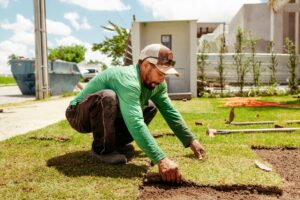
- For sod: Lay strips in a brick-like pattern with tight seams. Stagger joints, press edges together, and roll the area so the sod makes full contact with the soil, then water right away and keep it moist.
Aftercare follows a simple timeline:
- First 2 weeks: Keep the surface consistently damp, stay off the area, and watch for washouts after storms so you can fix them quickly.
- Weeks 3 to 6: Slowly reduce how often you water but increase depth. Begin mowing once the grass reaches the recommended height, using sharp blades and light passes.
- After 6 weeks: Settle into a regular lawn care routine suited to Montgomery County, with seasonal fertilization, weed control, and periodic aeration so roots stay strong and soil stays open.
A lawn planned around your soil type, sun and shade pattern, and water access stands a much better chance of thickening up and staying healthy, instead of fading after the first tough season.
Get Started With Your Project Today
If you are ready to upgrade your yard with professional results, our team at Jamison Lawn Care is here to help. Explore our lawn care and sod installation services to get a healthy, green lawn without the guesswork. We will walk you through the process, answer your questions, and schedule a time that works for you. Have specific needs or a custom project in mind? Just contact us to get started.