DIY or Professional Lawn Fertilization: What Really Pays Off in PA
Good fertilization is one of the biggest keys to a thick, green lawn in Pennsylvania. It feeds the grass, strengthens the roots, helps fight weeds, and helps turf bounce back after winter and heavy foot traffic. The tricky part is deciding if you should spread fertilizer yourself or bring in a local lawn care team.
In late spring, yards across Bucks and Montgomery County really wake up. What you choose to do now affects how your lawn looks and feels the rest of the year. In this article, we will compare DIY and professional fertilization for our area, look at costs beyond the bag of fertilizer, walk through timing by season, and talk about the risks of burn and runoff. As a local PA lawn care provider, we work with our weather swings, our soil, and our local rules every day, so we see both sides up close.
Real Costs of DIY vs. Professional Fertilization
On the surface, DIY fertilization looks simple. You buy a bag, spread it, and you are done, right? In reality, the cost is more than just one product.
Common DIY expenses include:
- Fertilizer bags for several applications
- A spreader for granular products
- A sprayer for liquid weed control or liquid fertilizer
- Soil test kits and storage space for leftover products
There are also hidden costs with DIY. Many homeowners spend time reading confusing labels, guessing at spreader settings, and trying different products before they find what actually works in our PA lawns. If the wrong product is used or applied at the wrong rate, you can end up with thin areas, weeds, or even dead patches that need repair.
Professional fertilization programs are priced differently. You are not just paying for the product that day. You are spreading the cost of:
- Commercial-grade equipment that applies fertilizer more evenly
- Bulk materials chosen for our local soil and turf types
- Training and experience in reading the lawn and adjusting products
While we will not talk specific numbers, the long-term value is often in fewer mistakes and stronger turf. A healthy lawn needs less patching, less reseeding, and can fight off many weed and disease problems on its own. That can keep your total lawn care costs lower over time, especially when timing and product choice are on point.
The size and use of your property matter too. A small, simple suburban yard with average expectations may seem easier to handle yourself. Larger lots, sloped areas, or commercial sites with heavier foot traffic bring more risk if applications are off. For those, a professional plan is often the smarter financial choice.
Season-by-Season Fertilizer Timing in Pennsylvania
Most lawns in Bucks and Montgomery County are cool-season grasses. They like our spring and fall weather and struggle a bit in summer heat. Fertilizer timing should match how the grass naturally grows.
Here is how we look at the year:
- Early spring: The goal is a light feeding to wake the lawn up slowly. This is also the time for pre-emergent crabgrass control. Too much nitrogen now can cause fast, soft growth that invites disease and runs out of energy by summer.
- Late spring: This is a prime feeding window. The lawn is growing well, so a balanced application can deepen color and thicken turf before hotter weather hits.
- Summer: Fertilization becomes tricky. Heavy feeding in heat can burn stressed turf, especially during dry spells. Many lawns need little to no nitrogen in the hottest part of summer. Instead, the focus is on protecting roots and avoiding added stress.
- Fall: This is the most important feeding season for cool-season grass. Heavier fall fertilization supports root growth, helps the lawn recover from summer, and sets it up for winter survival and strong spring green-up.
DIY timing often comes down to when someone has a free weekend or when a big-box store has a sale. That can lead to applications that are too early, too late, or stacked too close together. Pros use scheduling systems based on soil temperature, rainfall patterns, and local microclimates. In our area, we also pay attention to how shady or sunny a yard is, how wet certain parts stay, and how the lawn responded in past seasons.
When fertilizer goes down at the wrong time, you can:
- Waste money on product the lawn cannot use
- Encourage disease by pushing soft growth during humid weather
- Increase runoff, since the grass is not ready to absorb the nutrients
Good timing is just as important as the fertilizer itself.
Lawn Burn, Runoff, and Environmental Risks
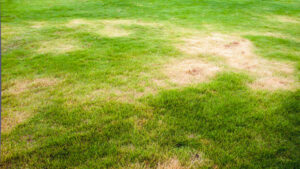
Fertilizer burn happens when grass gets more nutrients than it can safely handle, especially nitrogen. It usually shows up as brown, crispy, or straw-colored patches that may follow the pattern of the spreader path. Burn is more likely when:
- The application rate is too high
- The spreader settings are wrong
- Fertilizer overlaps too much in certain spots
- The lawn is already stressed by heat or drought
Runoff is another concern in Pennsylvania. When heavy rain hits right after fertilizing, unused nutrients can wash off driveways, sidewalks, and compacted soil into storm drains and streams. Those nutrients can then feed algae growth and affect water quality in local creeks and the Delaware River watershed.
DIY applications are more at risk for these issues, simply because most homeowners do not spend their days calibrating spreaders or reading product labels. Common mistakes include:
- Spreading before a storm
- Ignoring buffer zones near pavement and drains
- Using the wrong product for the season
- Guessing at application rates
Professional lawn care teams take extra steps to lower these risks. At Jamison Lawn Care, for example, we focus on:
- Using slow-release formulations where appropriate
- Calibrating equipment so rates are consistent
- Leaving buffers near hard surfaces and water features
- Cleaning stray granules from driveways and sidewalks
Those habits help protect our local environment while still giving your lawn what it needs.
When DIY Makes Sense Vs When to Hire a Pro
DIY lawn fertilization can make sense in some cases. It may be a good fit if:
- Your lawn is small and fairly flat
- You enjoy yard work and want to learn more about turf care
- You are willing to read labels closely and follow directions
- You have the time to test soil and track seasonal timing
If that does not sound like you, hiring a local PA lawn care pro is often the safer path. Professional fertilization is usually the better choice when:
- The property is large, sloped, or has many obstacles
- The lawn already has bare spots, disease, or weed issues
- Your schedule is packed and lawn care slips down the list
- You manage an HOA or commercial site that needs consistent, clean curb appeal
Many homeowners in Bucks and Montgomery County settle on a hybrid approach. They handle mowing, light watering, and basic clean-up. A lawn care company handles fertilization, weed control, and seasonal adjustments. This mix keeps you involved without asking you to take on the higher-risk, more technical work.
Local experience matters. Our team works on PA lawns all day, every season. We see how certain weeds show up earlier in some neighborhoods, how shade and soil type change the plan from block to block, and how quickly a storm can undo a poorly timed DIY treatment. That kind of on-the-ground knowledge is hard to match with a generic schedule printed on the back of a bag.
Take the Next Step to a Safer, Greener PA Lawn
The real choice is not just DIY vs professional. It is about how much time and risk you want to take on to keep your lawn healthy, safe, and looking good. Fertilizer is powerful, and in our Pennsylvania climate where rain and heat can change quickly, it pays to be careful.
We always suggest starting with a simple checklist: know your lawn size, get a soil test, note any thin or weedy areas, and think about what you want your lawn to look like in each season. From there, decide how much of the work you truly want to handle alone. At Jamison Lawn Care, we are here to help homeowners and businesses in Bucks and Montgomery County build fertilization plans that fit local conditions and personal comfort levels, so your lawn can stay greener with less risk of burn and runoff all year long.
Get a Healthier, Greener Lawn Without the Hassle
If you are ready to stop guessing about what your yard needs, let Jamison Lawn Care handle the details so you can simply enjoy the results. Our tailored PA lawn care services are designed to keep your grass healthy, vibrant, and looking its best throughout the season. Reach out today to tell us about your property and we will recommend a plan that fits your goals and budget. Have questions or need a custom quote fast? Just contact us and we will follow up promptly.