Stop Early Summer Lawn Damage Before It Starts
Early summer should be the time when your lawn looks thick, green, and ready for cookouts. Instead, many Bucks County homeowners start to see brown patches, chewed grass blades, or thin, brittle turf right when the warm weather hits. The lawn was doing great in spring, so what changed?
Late May through June is prime time for several lawn insects to hatch and start feeding. When they move in, they can undo months of mowing, fertilizing, and weed care. Left alone, these pests can spread fast, hurt curb appeal, and make your yard less safe and comfortable for people and pets.
As a local lawn care team, we understand how quickly early summer insects can turn a healthy lawn into a patchy mess. Knowing which pests show up, what their damage looks like, and when to bring in a lawn insect control service is the first step to protecting your yard. We will walk through the main culprits, warning signs to watch for, and how a solid seasonal plan can keep your grass in good shape.
Why Early Summer Triggers Insect Surges
Early summer in Bucks and Montgomery County brings a perfect mix of warmth, moisture, and long days. That mix speeds up insect life cycles and pushes many species into their hungriest stages right when lawns are thick and full.
A few key things happen at this time of year:
- Soil warms up, which wakes up grubs and other insects hiding below the surface
- Humid air and regular rain showers help eggs hatch and young insects grow
- Longer days mean more feeding time on your grass
Spring fertilization and proper watering help your lawn grow lush and green. That is good, but it can also act like a buffet for insects that feed on grass roots and blades. A thick lawn holds more moisture and organic material, which some pests love.
Weather patterns also play a role. Mild winters can help more insects survive underground. Wet springs can lead to more eggs hatching in early summer. When you add all of this together, you get a surge of feeding activity just as temperatures climb.
There is also a timing risk. If early signs are missed in late May or June, insect numbers can explode by July. At that point, damage spreads faster, control gets tougher, and recovery takes longer, even with good care.
Common Early Summer Lawn Pests in Bucks County
Different insects cause different kinds of damage, and that is why correct identification matters. Treating for the wrong pest can waste both time and effort.
Grubs and beetle larvae
Japanese beetle grubs and other beetle larvae are a common hidden problem. They live below the surface and feed on grass roots in late spring and early summer. As they eat, the lawn above them starts to:
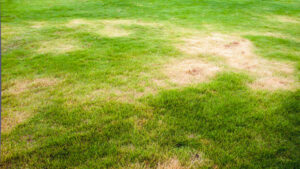
- Turn brown or gray in irregular patches
- Feel spongy underfoot
- Lift up easily, almost like a loose carpet
Grub damage often shows up in sunny, open areas and can look a lot like drought stress or poor fertilization. The big giveaway is how easily the turf peels back and how weak the roots appear.
Chinch bugs and other surface feeders
Chinch bugs live near the soil surface and suck sap from grass blades. Their feeding can cause:
- Irregular yellow, tan, or straw-colored patches
- Damage that spreads quickly during hot, dry spells
- Trouble areas that begin along sidewalks, driveways, or patios where heat reflects
Because they work at the surface, chinch bug damage can be mistaken for dry spots, but watering does not fix it.
Sod webworms and caterpillars
Sod webworms are the larvae of small moths that fly low across the grass at dusk. The caterpillars feed mostly at night and chew off grass blades near the soil. Signs of sod webworms include:
- Small, scattered brown patches that gradually merge
- Thinning turf even though mowing and watering have stayed the same
- Tiny silk-lined tunnels or clippings in the thatch layer
Each of these insects needs a targeted approach. Products that work on grubs might do little for webworms or chinch bugs, and the wrong treatment can let damage keep spreading.
How to Spot Insect Damage Before It Spreads
Catching insect damage early gives your lawn a much better chance to recover. A quick weekly walk across the yard can help you spot trouble before it gets out of hand.
Visual and physical clues to watch for:
- Brown or yellow patches that do not bounce back after watering
- Turf that feels spongy, thin, or brittle in certain areas
- Grass that pulls up easily in clumps, showing short or missing roots
- Small green or dark pellets on the soil surface that may be insect droppings
A couple of simple checks can give you more clues:
- Tug test for grubs: Gently pull on the grass in a damaged area. If it lifts easily and you can see white, C-shaped grubs in the soil, they may be the cause.
- Soap-and-water flush: In a small area, mix mild dish soap with water and pour it over the grass. Then watch for several minutes. Surface insects like chinch bugs may crawl up where you can see them.
If you find insects often when you check, or if damaged spots grow week after week, it is time to involve a professional lawn insect control service. Lawn pros can tell insect damage apart from issues like pet spots, dull mower blades, lawn disease, or heat stress, which can look very similar.
DIY Treatments vs. Professional Lawn Insect Control Service
Some homeowners try to solve insect problems with store-bought products. While these can help in limited cases, they also have clear limits.
Common problems with DIY treatments include:
- Broad-spectrum products that hit many insects, including helpful ones
- Products that do not reach deep enough into the soil for root-feeding pests
- Applying at the wrong time in the insect life cycle so results are weak
- Overlapping products that stress the lawn or cause yellowing
A professional lawn insect control service brings a more focused approach. Trained technicians can:
- Identify the exact insect and its current life stage
- Match the right control method to the specific pest
- Time treatments so they hit insects when they are most active and vulnerable
- Work treatments into your mowing, fertilization, and weed control schedule
There are also safety and environmental benefits. Pros work with labeled products and calibrated equipment, and they apply materials only where they are needed. That helps protect kids, pets, and nearby planting beds. Targeted, responsible applications focus on solving the problem without over-treating your property.
Building a Seasonal Defense Plan for Your Lawn
Stopping early summer insect surges is not only about one treatment. It is about building a lawn that can stand up to normal pest pressure and a plan that keeps you one step ahead.
Strong preventive steps for late spring and early summer include:
- Mowing at the right height so grass can grow deeper roots
- Watering less often but more deeply to promote stronger root systems
- Balanced fertilization that feeds the lawn without stressing it
- Pre-emptive grub treatments and regular inspections as soil warms
At Jamison Lawn Care, we take an integrated approach to this kind of protection. Our team combines monitoring, timely insect treatments, and full-season lawn care to reduce the chance of large outbreaks. When one local company handles mowing, fertilization, weed control, insect control, and landscape care, every part of the plan works together instead of against the others.
The long-term benefit is a lawn that stays thicker, recovers faster, and needs fewer repairs. Staying ahead of early summer insect surges protects the time and money you already put into your property. For both residential and commercial properties in Bucks and Montgomery County, a customized plan that accounts for site conditions and past insect problems can keep turf healthier year after year.
Protect Your Lawn And Enjoy a Pest-Free Yard Sooner
If you are seeing damage or pests in your grass, now is the time to act before the problem spreads. Our targeted lawn insect control service is designed to stop infestations and protect your turf for the long term. At Jamison Lawn Care, we diagnose what is really going on in your yard and apply the right treatment at the right time. Have questions or ready to schedule service? Just contact us and we will help you get started.