If your grass starts to fade right when you want it to look its best, you are not alone. Summer in Pennsylvania is tough on lawns, especially in Bucks and Montgomery County, where we see high heat, sticky humidity, and dry spells that stress turf from late spring through late summer.
In this article, we will walk through why your grass changes color, how to tell stress from real damage, what is going on in those problem spots that always brown out first, and what smart watering, mowing, and treatments can do to protect your lawn color in PA heat.
Why Your Lawn Looks Tired in Pennsylvania Summers
Our area mostly grows cool-season grasses like Kentucky bluegrass, perennial ryegrass, and fescue. These grasses love the cooler days of spring and fall. When long, hot stretches hit, they start to struggle, especially when rain slows down.
Certain parts of your yard turn into heat-stress zones. Common trouble spots include:
- Areas next to driveways, sidewalks, and patios
- South-facing slopes that get full sun most of the day
- Thin or compacted soil along front walks and entryways
- High-traffic sections where kids and pets play
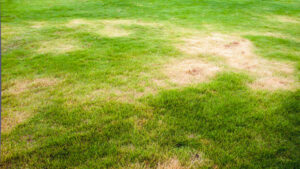
These places heat up faster, dry out sooner, and lose color first. That does not always mean the grass is dead. Sometimes it is just going dormant to protect itself, which is normal for cool-season turf in PA.
The key is learning to read what your lawn is trying to tell you with its color. When you treat those early signs the right way, you help prevent long-term thinning and bare patches that are harder and more costly to fix later.
Reading Grass Color Like a Health Report
Your lawn’s color is like a simple health report. Different shades point to different problems.
Common color changes include:
- Light green or yellow: often early heat stress, low nutrients, or shallow roots
- Straw brown patches: could be dormancy, intense local heat, or possible disease
- Dark green streaks or spots: may point to uneven fertilizer or uneven watering
One big question is, is the grass dormant or dead? A few simple checks can help:
- Tug test: Gently pull on the blades. If they resist and do not come up easily, roots are often still alive.
- Look at the crowns: At the base of the blades, you may see pale but firm crowns. Firm crowns are a good sign.
- Watch after rain or watering: If color starts to return in a week or two, you are likely looking at stress and dormancy, not death.
Other clues go along with color too. Curled or folded blades, crunchy texture, or footprints that stay visible are strong signs of drought and heat stress.
Quick “miracle fixes” like heavy fertilizer or constant watering can look helpful at first but often cause more harm. A slower, step-by-step look at color, thickness, and soil conditions works better for long-term lawn care in PA.
How Heat and Soil Create Summer Stress Zones
Even a small yard can have many different growing conditions. One corner might be cool and shady under a tree, while another sits in full sun next to blacktop and bakes all afternoon.
Typical spots that become summer stress zones include:
- Full sun front lawns with a slope facing the road
- Edges along asphalt driveways and parking lots that hold and reflect heat
- Backyard play or pet areas where feet pack down the soil
- Thin, older turf where topsoil is shallow or drainage is poor
Compacted soil is a big problem in many Bucks and Montgomery County neighborhoods. When soil is packed tight, roots cannot grow deep, and water has a hard time soaking in. Shallow roots dry out faster, and color fades sooner during heat.
Thatch and mowing habits matter too. A thick thatch layer holds heat and blocks water from reaching the roots. Cutting too short exposes the soil, increases evaporation, and weakens grass so it cannot handle stress.
Understanding how all these pieces fit together helps map your yard’s hot spots. With the right care in those zones, you can protect color where it usually fails first.
Smarter Summer Watering and Mowing for PA Lawns
Watering and mowing the right way in summer makes a big difference in how your lawn looks and how well it survives heat waves.
For cool-season turf in our area, we generally aim for about 1 inch of water per week, including rainfall. Important watering tips include:
- Water deeply and less often, instead of a little bit every day
- Run sprinklers in the early morning, not at night or mid-afternoon
- Focus extra attention on known stress zones during dry spells
- Watch how quickly the soil dries and adjust as weather changes
Light, frequent watering encourages shallow roots, which makes grass more likely to burn out in hot spots next to pavement or on sunny slopes.
Mowing habits should also change in summer:
- Raise mowing height to about 3 to 4 inches
- Keep mower blades sharp, so they cut cleanly instead of tearing
- Do not remove more than one-third of the blade at a time
- Skip or delay a mow during extreme heat or severe drought
It also helps to water the day before a scheduled mow when possible. Avoid mowing when the lawn is under heavy stress in the middle of a hot afternoon. Small changes like these help keep more green on top and deeper roots below.
Fertilization, Treatments, and When to Call a Pro
Fertilizer is food, but too much in the wrong season can scorch your lawn. Heavy fertilization during peak heat can burn grass and lead to more color problems. For cool-season lawns, most of the feeding is usually focused on spring and fall, with lighter, more careful work in the summer.
Summer treatments often focus on things like:
- Targeted weed control in problem areas
- Grub and insect monitoring and prevention
- Watching for disease in shaded, damp, or stressed spots
- Gentle support for color without pushing heavy growth
A professional soil test is one of the best tools for improving lawn color over time. It helps guide fertilizer choices, timing, and lime applications, so you are not guessing with products that may not match your soil.
It is a good idea to bring in professional lawn care help if you notice:
- Brown patches that keep spreading week after week
- Uneven color even though you water carefully
- Signs of insects, grubs, or fungus in the turf
- The same areas failing every single summer
Consistent, local lawn care in PA helps your yard recover faster after heat and keeps color more even across the whole property, not just in the easy spots.
Transform Your Pennsylvania Lawn Into a Space You Love
If you are ready for reliable, professional lawn care in PA, our team at Jamison Lawn Care is here to help you get started. We take the time to understand what your yard needs so it stays healthy, clean, and inviting throughout the season. Reach out today to discuss your property and schedule a visit, or contact us with any questions about your lawn.